

Buying a home in Melbourne is a major financial decision. Most buyers order a building and pest inspection as a safeguard. It feels thorough. It feels reassuring.
But here’s the reality: a standard termite inspection is non-invasive. That means we cannot see through walls, under tiles, or inside concealed structural timbers.
If termites are quietly eating the wall frame behind freshly painted plaster, a purely visual inspection may not detect them.
In high-risk Melbourne suburbs, that limitation matters.
As a registered builder and licensed pest technician, I’ve seen termite damage hidden behind immaculate finishes. I’ve also seen buyers avoid $20,000-$40,000 repair bills because they chose a more advanced inspection.
In many Melbourne inspections, the property can present perfectly on the surface while the real damage sits inside wall cavities or concealed framing.
This guide explains:
- What an invasive termite inspection actually involves
- When the extra cost is justified
- How much it costs in Melbourne
- The risks specific to local soil and construction types
If you’re trying to understand the difference between visual inspections and advanced investigative methods, this advanced termite detection guide explains how inspectors identify hidden termite activity and when deeper investigation becomes necessary.
The Limitation of a “Visual-Only” Termite Inspection
A standard termite inspection melbourne service focuses on accessible areas:
- Subfloors
- Roof voids
- External perimeters
- Visible timbers
- Garden beds and fences
Inspectors look for:
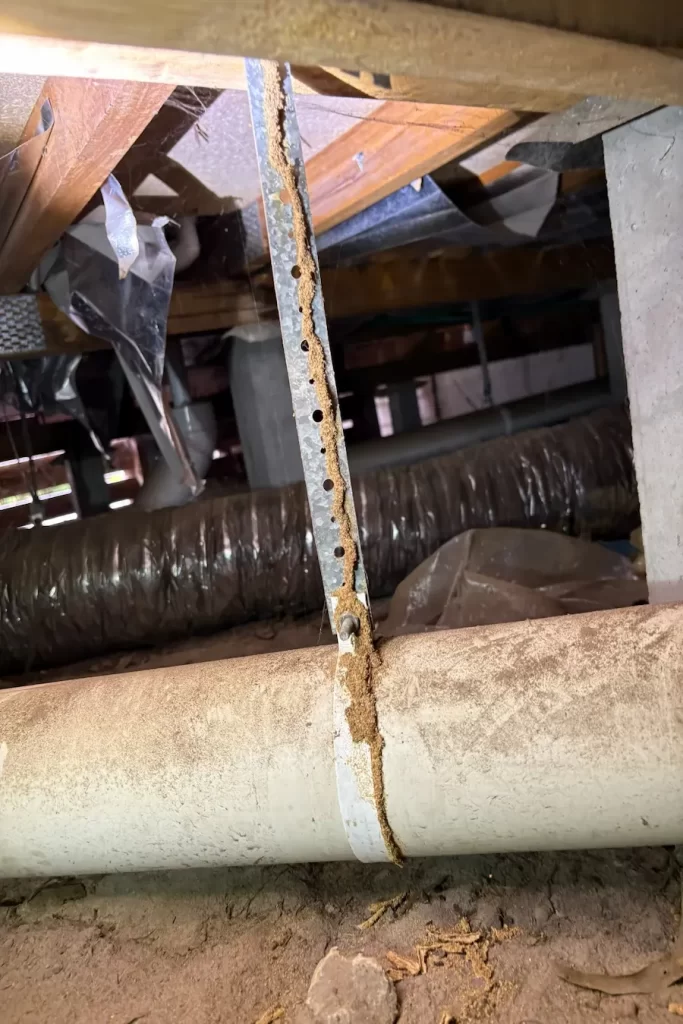
- Mud leads (termite shelter tubes)
- Damaged timber
- High moisture readings
- Previous treatment evidence
- Conditions conducive to termites
However, we cannot:
- Remove wall linings
- Lift fixed flooring
- Drill into framing
- Open sealed cavities without permission
That’s where the risk lies.
Melbourne’s Termite Risk Factors
Melbourne is not immune to termites. In fact, certain conditions increase risk:
- Reactive clay soils across the eastern and south-eastern suburbs
- Slab-on-ground construction common in growth corridors
- Concealed slab edges
- Garden beds built up against external walls
- Large trees close to dwellings (common in Glen Waverley, Wantirna, Berwick)
In inspections across Melbourne’s eastern suburbs, raised garden beds and concealed slab edges are one of the most common places we find early termite entry points.
According to CSIRO, subterranean termites are active throughout Victoria, particularly in areas with suitable moisture and soil conditions.
The Victorian Building Authority also requires termite management systems in new builds under the National Construction Code. See guidance from the Victorian Building Authority.
Yet many older homes pre-date these standards.
If termites enter through concealed slab penetrations or cracks, visual checks alone may not reveal the entry point.
What Is an Invasive Termite Inspection?
“Invasive” doesn’t mean destructive. It means accessing concealed areas when there is reasonable suspicion.
In practice, an invasive inspection usually involves a few targeted access points, which may include:
- Drilling small inspection holes in suspect timbers
- Removing small sections of skirting (with permission)
- Lifting loose carpet edges
- Accessing roof or subfloor manholes
- Using a borescope to inspect inside wall cavities
This is always done:
- With vendor consent
- In targeted areas (not randomly)
- Using minimal-impact techniques
The Technology Behind Advanced Detection
(Note: this section is generated, you can add your tools here)
At Buy Wise Inspections, we use specialised tools before considering physical intrusion.
Termatrac T3i
A radar-based device that detects movement behind walls without drilling.
Thermal Imaging Cameras
Termite nests generate heat. Thermal imaging can reveal temperature anomalies in wall cavities.
Moisture Meters
Termites need moisture. Elevated readings in framing or slab edges often signal risk.
Borescopes
A small camera inserted through a tiny drilled hole to visually confirm activity.
While a standard termite inspection Melbourne is a strong baseline, invasive checks go where the eyes and surface tools can’t.
While radar scanning, thermal imaging and moisture meters provide valuable information, there are situations where concealed activity still cannot be confirmed visually. This is exactly when to upgrade to an invasive inspection, particularly if early indicators suggest termites may be active inside wall cavities or structural timbers.
When Is the Extra Cost Justified?
An invasive inspection is not necessary for every property.
It becomes justified when red flags appear.
1. High Moisture Readings
If we detect elevated moisture in:
- Wall frames
- Skirting boards
- Slab edges
- Bathrooms adjoining external walls
But there’s no visible plumbing leak, further investigation is warranted.
Termites are attracted to damp timber.
2. Evidence of Previous Termite Treatment
If the property has:
- Old drill holes in slab edges
- Chemical treatment records
- Baiting systems
That indicates prior termite activity.
History increases risk.
3. Slab-on-Ground Homes with Concealed Edges
Modern homes in growth corridors like Berwick, Pakenham and Clyde North commonly feature:
- Rendered finishes
- Tiled slab edges
- Landscaping built up against walls
These conceal entry points.
If we find “mudding” but cannot trace its origin, invasive inspection becomes a logical next step.
4. Established Gardens and Trees Close to the House
In suburbs such as Glen Waverley and Wantirna, mature trees and dense landscaping create:
- Constant moisture
- Shaded soil conditions
- Organic debris
These conditions increase termite pressure.
5. Suspicious Hollow-Sounding Timbers
When tapping reveals hollow sections behind paintwork, further investigation may be necessary.
The Risk Calculation: Cost vs Structural Damage
Many buyers hesitate at the additional fee.
But consider the alternative.
Termite damage repairs often involve:
- Removing plasterboard
- Replacing structural studs
- Replacing roof framing
- Rectifying load-bearing walls
- Reinstating finishes
Repair costs can exceed $30,000-$50,000 in severe cases.
In comparison, the invasive termite inspection cost is minor.
It is risk mitigation.
Breaking Down the Invasive Termite Inspection Cost in Melbourne
Transparency matters.
An invasive inspection costs more because it involves:
- Specialist equipment
- Additional on-site time (often 1-2 extra hours)
- Skilled interpretation
- Minor reinstatement of access points
Many Melbourne buyers first research inspection pricing before they book. If you’ve already looked into building and pest inspection pricing, it’s worth understanding how the invasive termite inspection cost compares to a standard visual check and why the upgrade may be recommended when hidden termite activity is suspected.
Indicative Melbourne pricing:
- Standard visual termite inspection: typically $300-$450
- Combined building and pest inspection: typically $500-$750
- Invasive upgrade: additional $250-$600 depending on scope
For a full breakdown of standard rates, see our detailed guide on building and pest inspection Melbourne cost.
Every property is different. The final cost depends on:
- Property size
- Accessibility
- Level of suspicion
- Required access points
The key point: you are paying for certainty.
Case Study: A Hidden Nest in Berwick
Growth corridor suburbs in Melbourne’s south-east often present ideal conditions for termite activity due to soil composition and slab-on-ground construction. Buyers researching termite risks in Berwick are often surprised to learn how frequently infestations occur behind perfectly finished walls.
A buyer engaged us for a pre-auction inspection on a home in Berwick, a fast-growing south-east corridor suburb.
The house presented beautifully:
- Fresh paint
- New carpet
- Recently landscaped
During the standard inspection, we detected:
- Slightly elevated moisture in one external wall
- Minor mudding on a concealed slab edge
No visible damage internally.
The buyer opted for an invasive upgrade.
We drilled two small inspection holes behind the skirting and inserted a borescope.
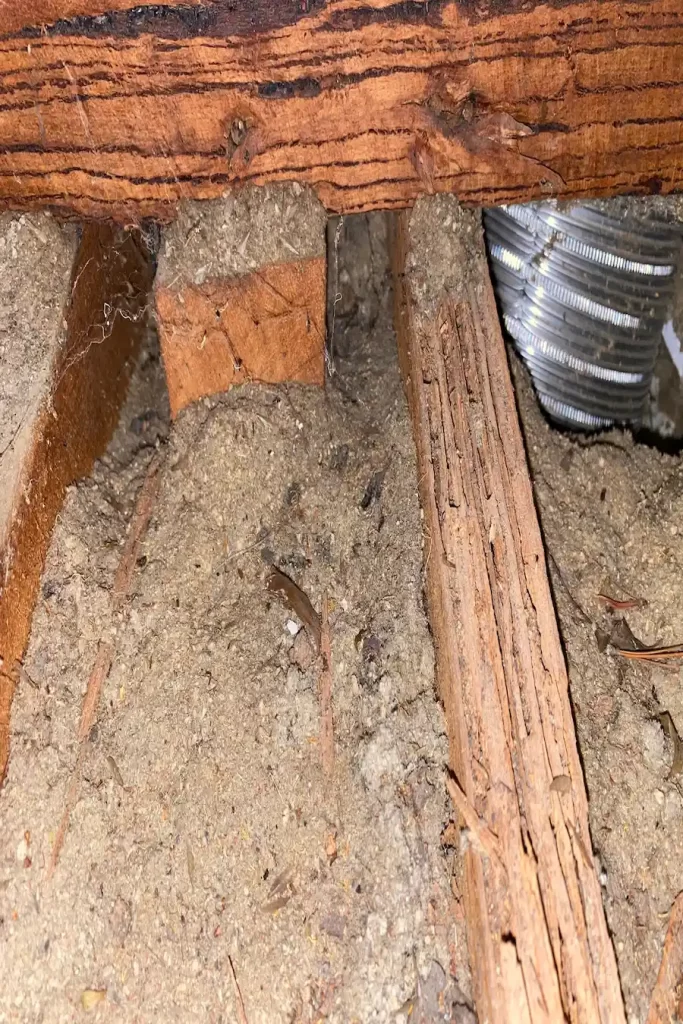
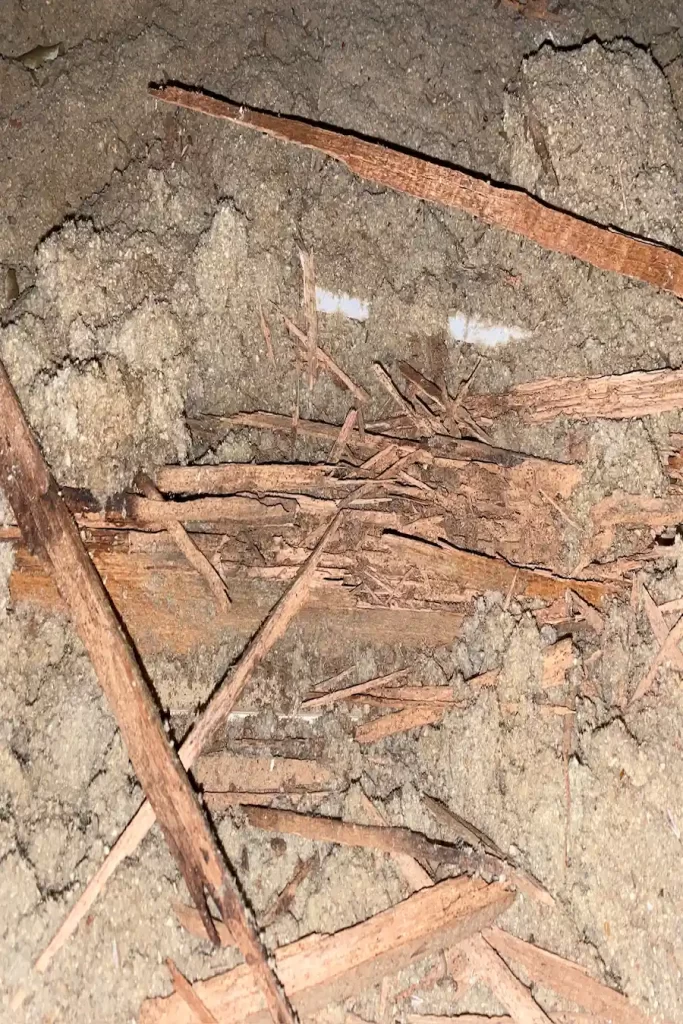
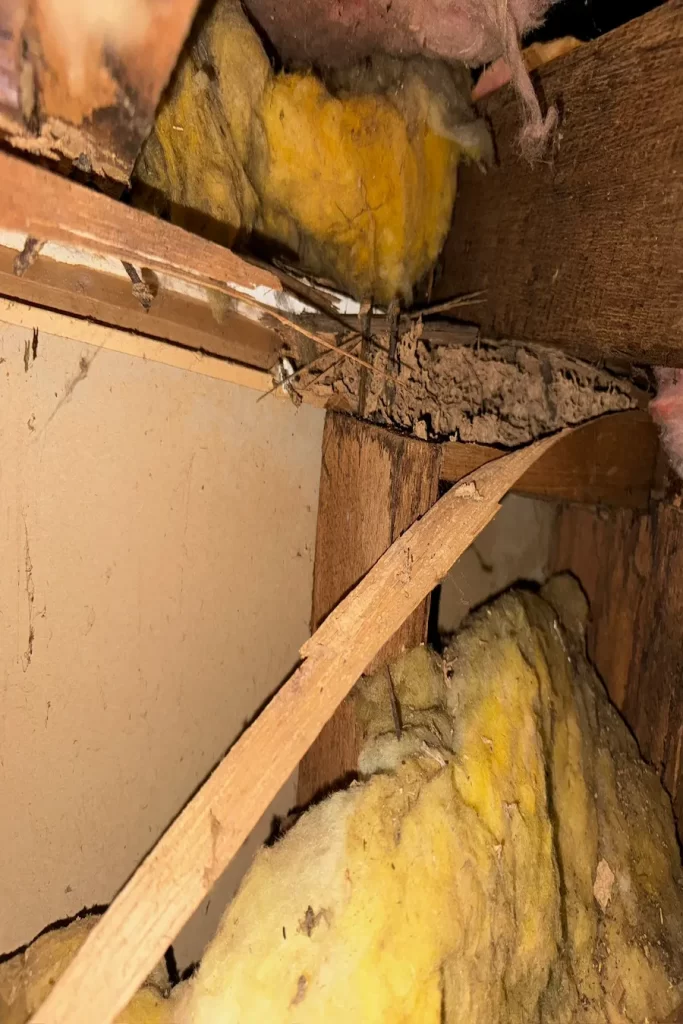
Inside the wall cavity was active termite activity and significant damage to structural studs.
The repair estimate from a builder was approximately $30,000.
The buyer withdrew from the auction.
The cost of the invasive inspection was a fraction of that.
This is why advanced detection exists.
Frequently Asked Questions
No. We use targeted, minimal-impact methods. Small drill holes are typically 6-8mm and are easily sealed. Vendor permission is obtained before any intrusive work.
It usually adds 1-2 hours to the standard inspection, depending on property size and complexity.
Yes. Access requires permission.
If a seller refuses reasonable investigative access where red flags exist, that may influence your risk assessment.
No. Many homes only require a thorough visual and technology-assisted inspection. Invasive methods are recommended only when indicators justify it.
Yes. Subterranean termites are active throughout Victoria. Research from CSIRO confirms termite presence across much of the state, particularly in suitable soil and moisture conditions.
Buying with Total Certainty
Peace of mind does not come from a surface-level report when risk indicators are present.
A visual inspection is often sufficient.
But when we detect moisture anomalies, mudding, or suspicious conditions in high-risk Melbourne suburbs, invasive inspection becomes a strategic decision.
It’s not about fear.
It’s about informed risk management.
If you’ve found a property showing red flags, don’t settle for limited access.
Book an advanced detection inspection with Buy Wise Inspections and make your purchase decision with confidence.
Enquire About Invasive Termite Inspections today!
About the Author
Philip Guildea
Director, Buy Wise Inspections
 Philip Guildea is a qualified carpenter, registered builder and licensed pest technician based in Melbourne.
Originally from Ireland, Phil began his career with a carpentry apprenticeship before contributing to his family’s construction business. He later established and operated his own successful construction company, delivering architect-designed homes and working on major Australian infrastructure projects.
Since founding Buy Wise Inspections, Phil has conducted thousands of pre-purchase building and pest inspections across Melbourne’s metropolitan and growth corridor suburbs. His qualifications also include licensing for pool safety barrier inspections.
Phil specialises in:
- Pre-purchase building and pest inspections
- Termite inspections
- New home quality control inspections
- Special purpose inspections
- Building advice for alterations and additions
His practical construction background allows him to identify not only defects, but their structural implications and repair pathways.
Disclaimer
This article is general information only and does not constitute building, pest, legal or financial advice. Inspection requirements and costs vary depending on property condition, accessibility and vendor permissions. Always seek a qualified, licensed professional for property-specific advice.